
Pool Equipment
Heat Pumps
Thermotec inverter heat pumps
Efficient, season-extending heat pumps designed for wooden swimming pools. All products are from the Thermotec range — built for reliability and optimised for above-ground pool use.
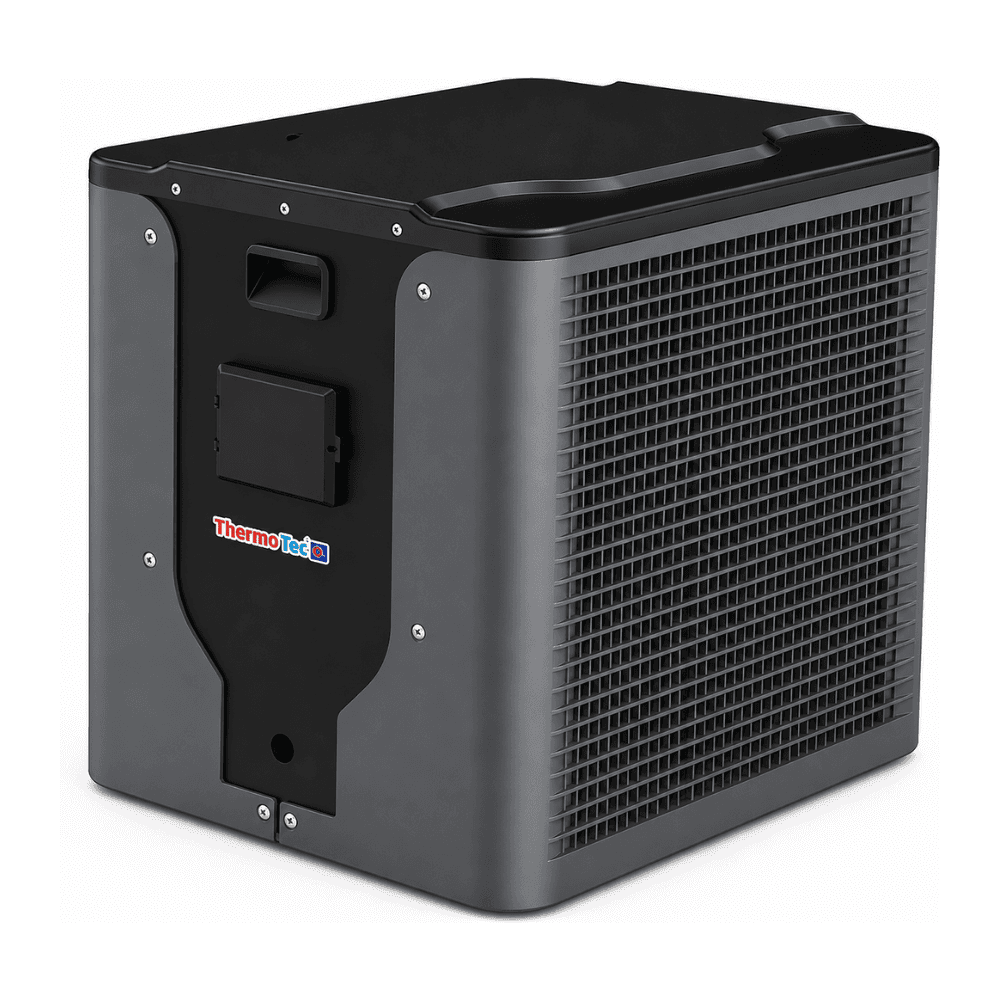
Thermotec Mini Heat Pump 5kw UK Plug and Play Pool Heater for Above Ground Pools
£550 inc. VAT
View product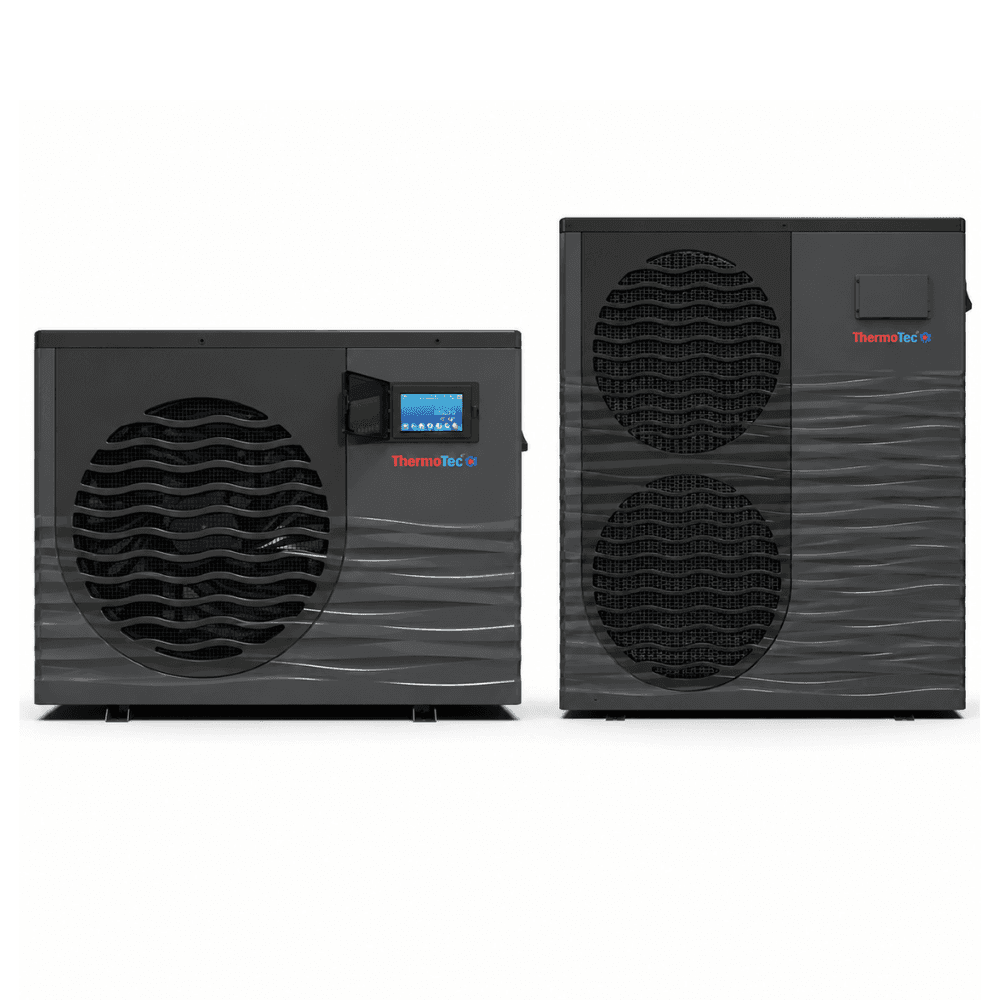
Thermotec Inverter Pro Horizontal Heat Pump Pool Heater with Wi-Fi for Swimming Pools or Koi Ponds 9kw to 24kw
£3,221 inc. VAT
View product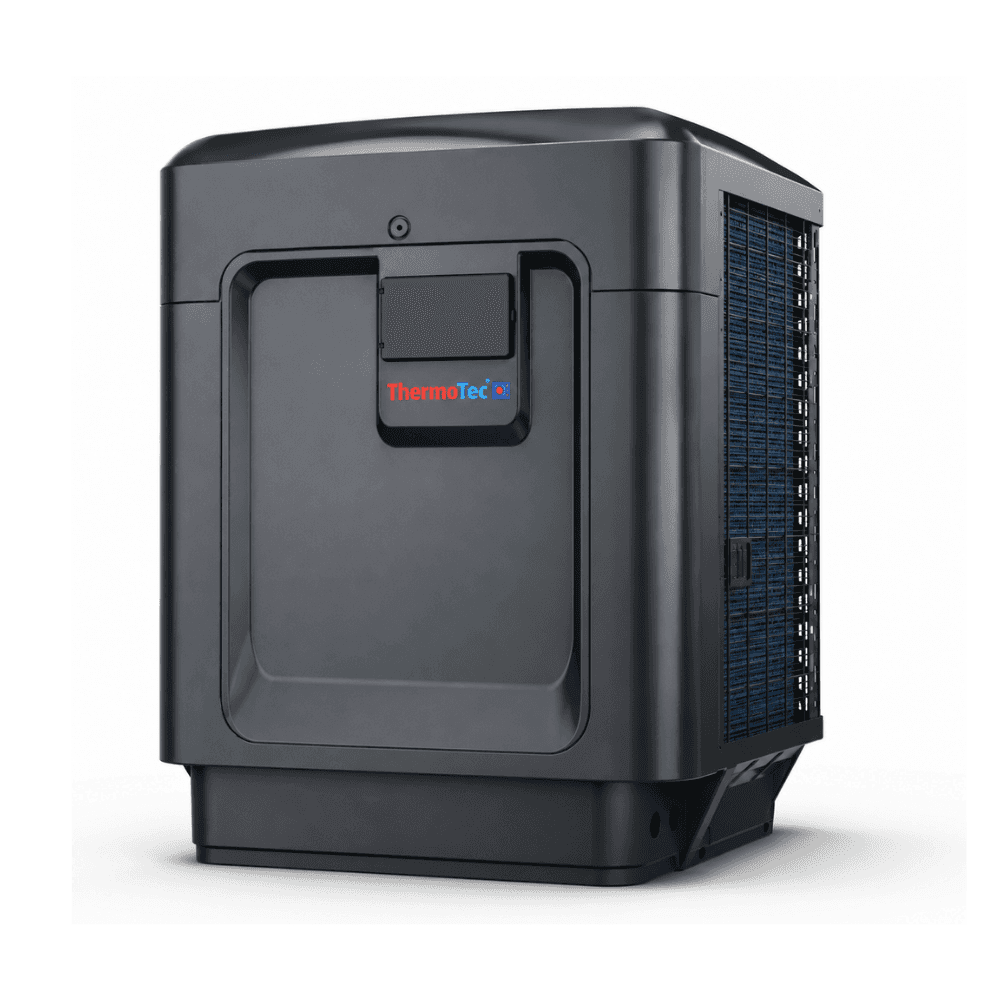
Thermotec Inverter Pro Vertical Heat Pumps Pool Heater with Wifi or Swimming Pools 29kw to 34kw
£4,271 inc. VAT
View product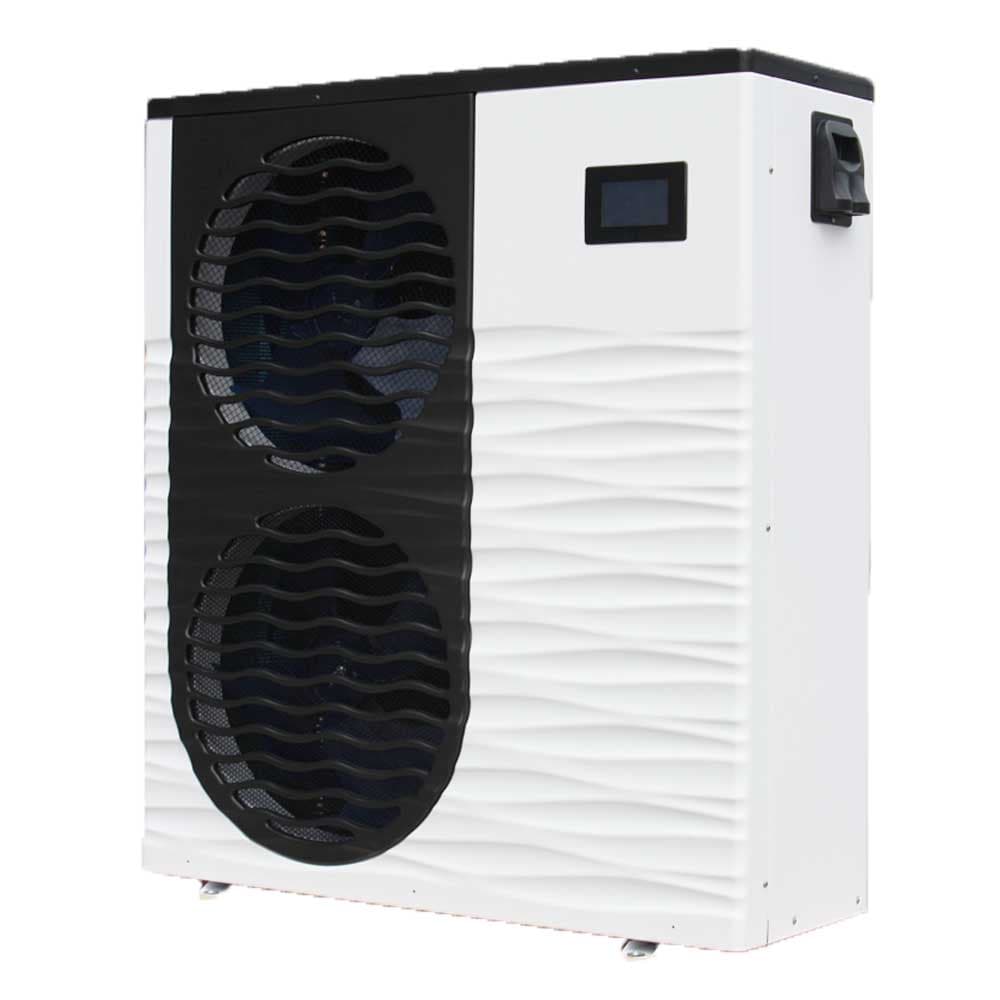
Thermotec Inverter Heat Pump 3 Phase Horizontal Swimming Pool 24kw with Wifi Pool Heater
£4,265 inc. VAT
View product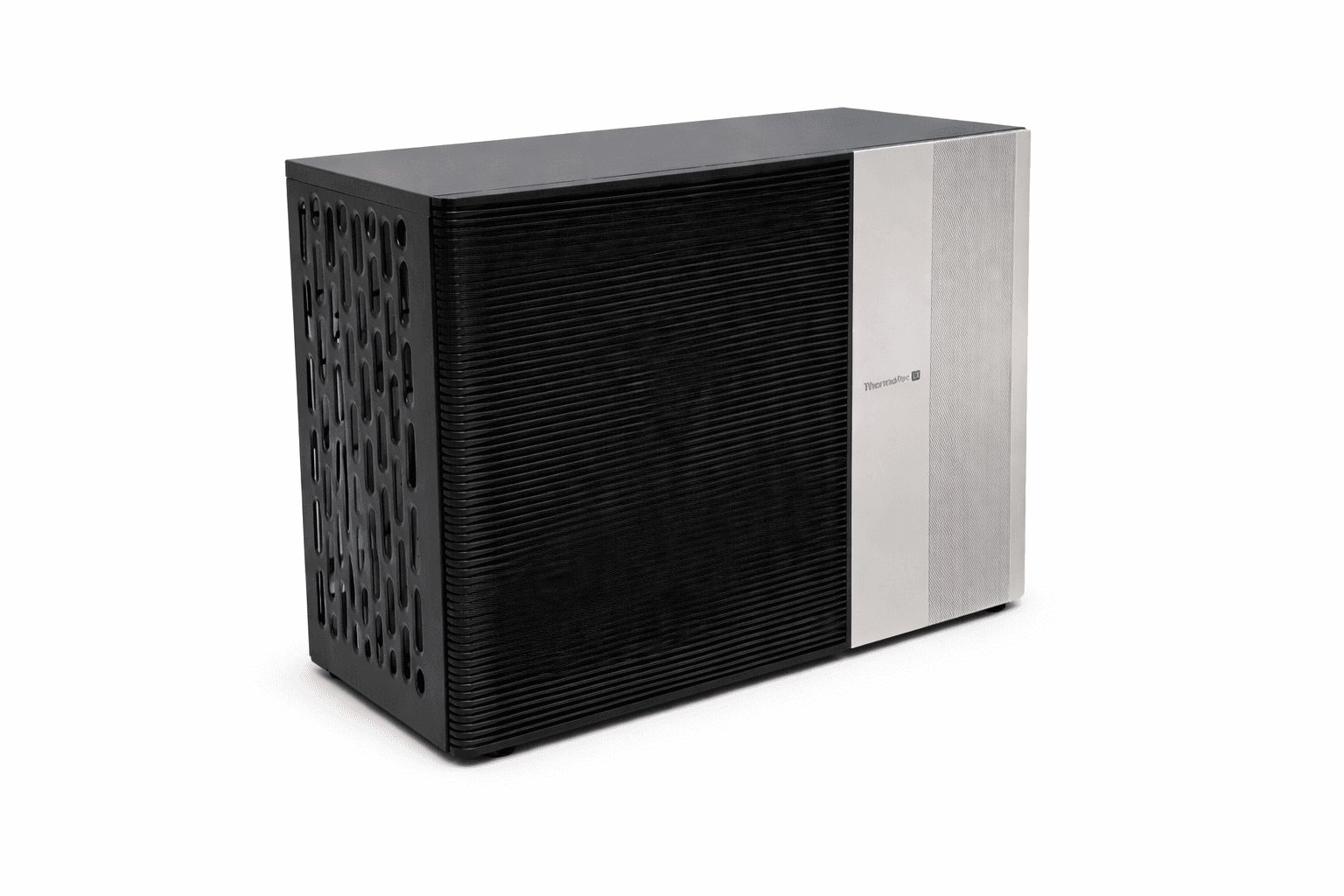
Thermotec Inverter Edge Heat Pump Horizontal With Wifi
£2,495 inc. VAT
View productHow to choose a pool heat pump
Sizing: match the heat pump to the water, not the garden
The number that matters is the volume of your pool in cubic metres. As a rough starting point, allow around 0.2 kW of heat pump output per cubic metre of water for a pool that is covered when not in use — so a 25 m³ pool wants something in the region of 5 kW. An uncovered pool, an exposed or shaded site, or a wish to swim in April and October all push that figure up. Undersizing is the more common mistake: a heat pump that is slightly too big simply runs for less of the day, whereas one that is too small never quite gets there on a cool week.
Inverter or on/off?
On/off heat pumps run at a single fixed speed — full output or nothing. Inverter models vary compressor speed to match demand, which means they run longer at lower power, hold temperature more precisely, use noticeably less electricity across a season, and are much quieter. For a pool that stays up all summer, an inverter unit is almost always the better long-term buy. The Thermotec range we stock is inverter throughout.
What it actually costs to run
A pool heat pump moves heat rather than generating it, which is why it is so much cheaper than an electric element. A modern inverter unit typically returns four to six units of heat for every unit of electricity drawn, in mild conditions. Efficiency falls as the outside air gets colder, which is why heat pumps suit the UK swimming season well and winter heating poorly. Pairing one with a solar cover is the single biggest saving available — most heat is lost from the water surface overnight, and a cover stops the majority of it.
Siting and installation
A heat pump needs clear air on the intake and exhaust sides — typically half a metre at the back and sides and two to three metres of clear space in front of the fan. Keep it within a few metres of the pool plant, standing on a level pad, and never box it into an enclosed space. It needs a weatherproof outdoor electrical supply installed by a qualified electrician, and it must be plumbed after the filter so it only ever sees filtered water. Condensate dripping underneath during operation is normal and not a leak.
Common questions
What size heat pump do I need for my pool?
Work from water volume. A useful rule of thumb is around 0.2 kW of output per cubic metre for a covered pool — so roughly 5 kW for a 25 m³ pool, or 8 kW for 40 m³. Add capacity if the pool is uncovered, on an exposed or shaded site, or if you want to swim from early April to late October. Send us your pool dimensions and we will size it properly rather than by rule of thumb.
How much does it cost to heat a pool with a heat pump?
For a typical 25–30 m³ above-ground pool held at around 28 °C with a solar cover, expect roughly £300–£700 across a six-month season. Without a cover the figure can easily double, because most heat is lost from the water surface overnight rather than through the walls.
Can a heat pump run in winter?
It can operate at low air temperatures, but efficiency drops as the air gets colder, so heating a pool through a British winter is rarely economic. Heat pumps are best used to extend the season at both ends — April to October rather than December to February.
How noisy is a pool heat pump?
An inverter model running at part load is roughly comparable to a domestic air-conditioning unit and quieter than a garden pump. Because inverters spend most of their time at low speed rather than cycling on and off at full power, they are considerably less intrusive than older on/off units — worth considering if the pool is close to a neighbour.
Do I need an electrician to install a heat pump?
Yes. A pool heat pump needs a dedicated weatherproof outdoor supply with appropriate protection, and that work must be done by a qualified electrician. The plumbing side — connecting into the circulation after the filter — is straightforward and most customers handle it themselves.
Need advice on equipment?
Our team can recommend the right products for your specific pool and setup.